Google Traffic Is Falling but Your AI Visibility Is Rising. Is Your SEO Actually Getting Worse?
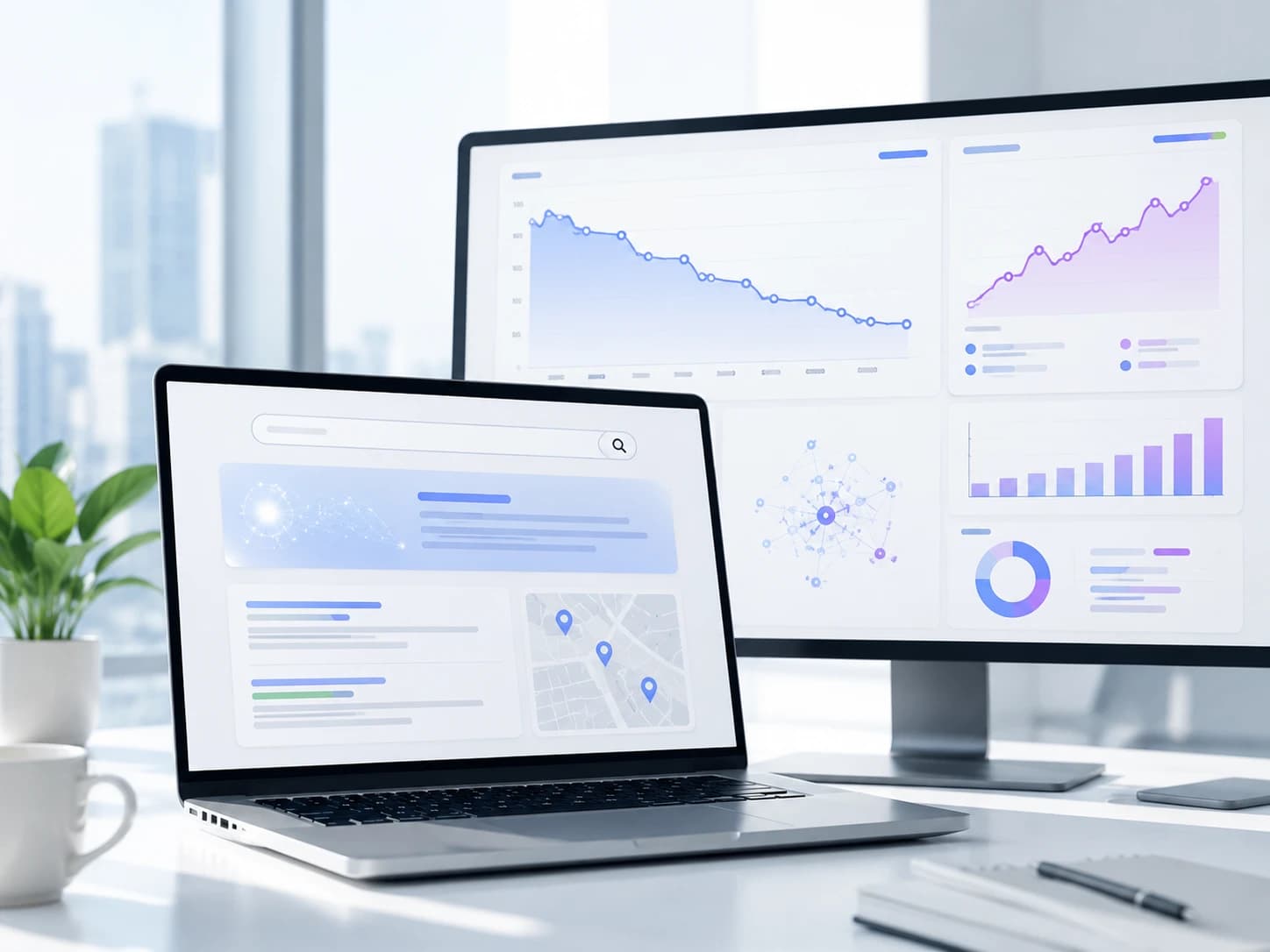
You open your monthly SEO report and organic clicks are down.
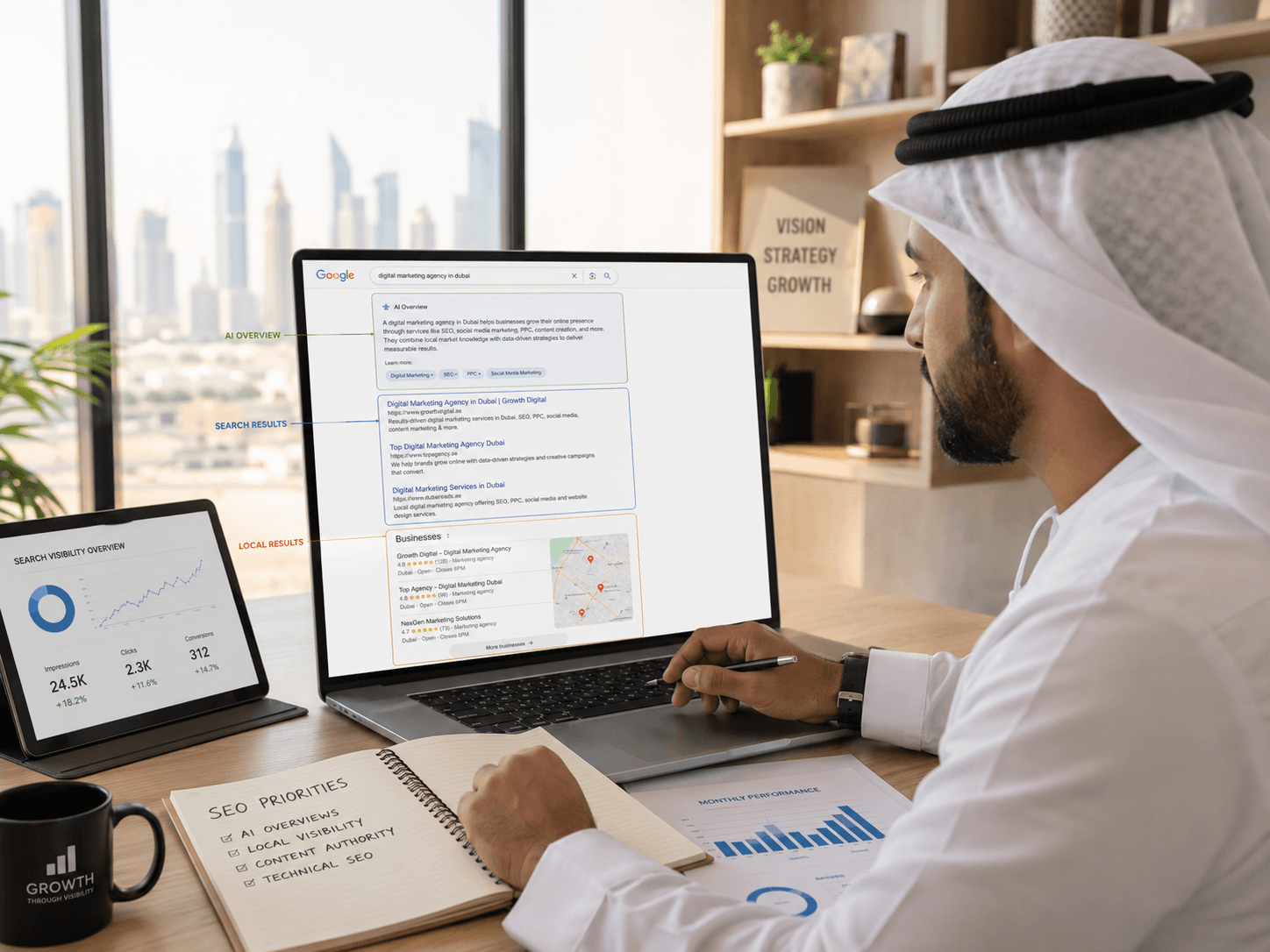
Rankings do not look dramatically worse. Your website is still appearing for relevant searches. You may even be seeing your pages or brand inside Google AI Overviews.
So which number should you believe?
We are going to see this question more often from UAE businesses because search is no longer always a simple journey from Google result → website click → enquiry.
Sometimes Google answers much more of the question before the customer reaches your site.
That does not mean traffic no longer matters. It means you need more context before deciding that your SEO is getting worse.
AI Overviews can reduce clicks without removing your visibility
A study published on 5 August 2026 analysed one month of browsing behaviour from a representative panel of 900 U.S. adults.
The researchers found that links cited inside Google AI Overviews were clicked in only about 1% of visits where an AI Overview appeared. Searches with AI Overviews were also associated with fewer clicks overall and a higher likelihood of the browsing session ending on the search results page. (Source referenced in the original article: arXiv.)
That is significant, but we would be careful with how we use it. It also does not mean every industry will experience the same behaviour.
A person researching “how does VAT registration work?” may get enough information from an AI answer and leave.
Someone searching for “corporate tax consultant Dubai” may still need to visit several businesses, check credibility and speak to someone.
So the first mistake we would avoid is assuming that every decline in organic clicks is caused by AI.
The second mistake is assuming that every AI mention is automatically valuable.
Google has started measuring AI visibility separately
Google made another important change in June 2026.
Search Console now has dedicated Search Generative AI performance reports for participating websites. The report shows how often URLs appear in generative AI features including AI Overviews and AI Mode. It can break visibility down by page, country, device and date. (Source referenced in the original article: Google for Developers.)
But there is an important limitation.
At launch, this is primarily an impression visibility report. It does not suddenly tell you the full commercial journey from an AI answer to a sale. Google is also rolling the feature out initially to a subset of websites. (Source referenced in the original article: Google for Developers.)
This is why we would not replace one simplistic metric with another.
Going from:
“Organic traffic increased, so SEO worked.”
to:
“AI impressions increased, so SEO worked.”
does not really solve the problem.
You need to look at several layers together.
How we would measure SEO now
When we review search performance, we would separate it into five levels.
1. Are you still visible?
Start with the basics.
Look at your important commercial queries, impressions, rankings and the pages Google is showing.
If you used to rank for a valuable service search and have dropped from page one to page four, that is still a genuine SEO problem.
AI has not made rankings irrelevant.
What has changed is that rankings alone no longer explain the full search experience.
2. Are you appearing inside AI-generated search?
If Google’s Generative AI report is available in your Search Console property, establish a baseline.
Look at:
- AI impressions
- Which pages are appearing
- Which countries are seeing them
- Whether visibility is rising or falling
Google says these AI-feature impressions were already part of overall Search Console performance data. The new report gives participating site owners a dedicated view of them. (Source referenced in the original article: Google for Developers.)
If the report is not available to your account yet, do not panic.
You can still manually test important customer questions and monitor the wider organic signals while Google expands access.
3. Which clicks are actually disappearing?
This is where the diagnosis gets useful.
Imagine your organic traffic falls 15%.
That number alone tells us very little.
If most of the loss came from informational blogs such as:
“What is X?”
while traffic to:
“X service in Dubai”
and your core service pages remained stable, the commercial impact may be smaller than the headline traffic drop suggests.
That distinction matters.
AI-generated answers are particularly capable of satisfying simple informational searches without requiring another click. Research this year has repeatedly found evidence that generative search can redirect attention away from source websites, although the impact varies considerably by query and content type. (Source referenced in the original article: arXiv.)
We would therefore segment traffic before reacting.
Informational traffic down and high-intent traffic down are two very different situations.
4. Are people still taking commercial actions?
For most UAE service businesses, SEO is not ultimately there to generate sessions.
It is there to contribute to actions such as:
- Calls
- WhatsApp conversations
- Enquiry forms
- Appointment bookings
- Quote requests
- Store visits
- Qualified leads
This is where we often see reporting become disconnected from the actual business.
A report might celebrate 20,000 organic sessions while management asks why enquiries have not moved.
Or the opposite can happen: traffic falls, but enquiry quality holds because low-value informational visits disappeared.
We would rather understand that difference than chase a traffic graph for its own sake.
5. Is search creating demand you cannot see in one analytics session?
This is the harder part.
A customer might:
- Ask Google a detailed question.
- See your business referenced.
- Not click.
- Search your company name two days later.
- Visit directly.
- Send you a WhatsApp message.
Standard last-click reporting may give very little credit to the original search exposure.
That does not mean you should start claiming every branded enquiry came from AI.
It means attribution becomes less certain.
So we would watch supporting signals such as:
- Branded search demand
- Direct visits
- Returning users
- Service-page engagement
- Google Business Profile actions
- Enquiry source information
- Qualified lead volume
For larger businesses, asking prospects “How did you first hear about us?” can also add useful context that analytics alone may miss.
A simple way to diagnose falling SEO traffic
Before changing your SEO strategy, compare these four situations.
| What you see | What it may mean |
|---|---|
| Rankings down + clicks down + enquiries down | Likely genuine SEO or competitive problem |
| Rankings stable + impressions stable + informational clicks down | Search behaviour may be changing |
| AI visibility up + clicks down + enquiries stable | Visibility may still be contributing value |
| Traffic up + qualified enquiries down | More traffic is not necessarily better SEO |
The table is deliberately simple.
The point is that traffic cannot be interpreted alone anymore.
What we would check first on a UAE business website
If you came to us saying, “Our organic traffic is falling,” we would not immediately recommend publishing more blogs.
We would first check:
- Which pages actually lost traffic?
- Which search intents declined?
- Did rankings change?
- Did AI-search visibility change?
- Did branded searches change?
- What happened to calls, forms and WhatsApp enquiries?
- Did qualified leads fall?
- Were there technical, tracking or website changes during the same period?
Only after that would we decide what needs fixing.
Sometimes it will be content.
Sometimes technical SEO.
Sometimes the site is still generating demand and the reporting model is the problem.
And sometimes SEO really is declining and AI is simply being used as an excuse.
When should falling Google traffic concern you?
We would take it seriously when the decline reaches the searches closest to revenue.
For example: If you run a business setup consultancy and informational traffic to a general article drops, that deserves investigation.
If searches around your actual business setup services in Dubai also lose rankings, impressions, clicks and enquiries, that is much more commercially important.
The same applies to clinics, professional services, real estate, home services, B2B companies and e-commerce businesses.
Prioritise the searches that connect to a real buying decision.
SEO is not becoming less measurable. It needs better measurement.
We do not think the answer is to stop caring about traffic.
Traffic still matters.
Rankings still matter.
Technical SEO still matters.
Content still matters.
What is changing is the assumption that every useful search interaction must produce a website click.
Google is now giving website owners visibility into generative AI impressions for the first time, while fresh research suggests those AI experiences can significantly alter clicking behaviour. (Source referenced in the original article: Google for Developers.)
So the question we would ask is no longer simply:
“Did our organic traffic go up?”
It is:
“Are we visible when the right customer searches, and is that visibility contributing to real business demand?”
That is a better SEO conversation.
Unsure whether your SEO is actually declining?
If your rankings, traffic, AI visibility and enquiries are telling different stories, we can review the full picture with you.
We will look at your search visibility, important pages, Search Console data, AI-search signals and conversion journey to identify whether the issue is SEO performance, changing search behaviour or the way performance is being measured.
Book a consultation with Zesta and we can review what is actually happening before you change your SEO strategy.
FAQs
Do Google AI Overviews reduce website traffic?
They can. Recent research has found lower clicking behaviour when AI Overviews appear, but the impact varies by query, industry and user intent. A traffic decline should therefore be diagnosed rather than automatically blamed on AI. (Source referenced in the original article: arXiv.)
Can I see AI Overview impressions in Google Search Console?
Google introduced dedicated generative-AI performance reports in June 2026 for a subset of websites. They show impressions, pages, countries, devices and dates associated with generative Search features. (Source referenced in the original article: Google for Developers.)
Does lower organic traffic mean my SEO is failing?
Not necessarily. Compare rankings, search intent, commercial-page traffic, conversions and qualified enquiries before reaching that conclusion.
Should I still track organic traffic?
Yes. The point is not to abandon traffic metrics, but to combine them with visibility and commercial outcomes.
What SEO metric matters most for a UAE service business?
There is no single metric. We would prioritise visibility for commercially relevant searches and then measure whether that visibility contributes to calls, WhatsApp enquiries, forms, bookings and qualified opportunities.